
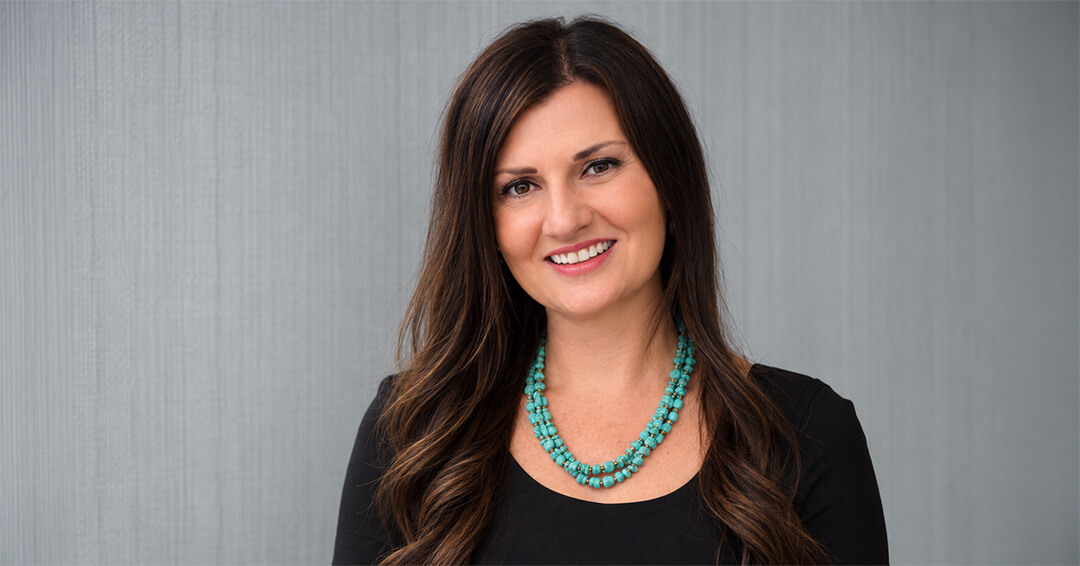
For Sherrie Moore, MSW, RSW, leadership in child welfare means creating the conditions for people to do difficult work thoughtfully. As Director of Child Welfare Services at Family and Children’s Services Niagara (FACS Niagara), Sherrie supports staff navigating complex decisions while working with community partners to strengthen services for children, youth and families.
After nearly 20 years in the field, Sherrie measures success through the relationships she builds and the ways families experience the system. Her approach offers a perspective on supporting ethical practice, making room for reflection and building partnerships grounded in trust.
Finding her place in child welfare
Sherrie’s interest in people, relationships and social justice drew her to social work. Her interest in social work deepened during young adulthood, although she did not initially imagine spending her career in child welfare. “There’s something incredibly meaningful about being in people’s lives during some of their hardest moments and being willing to sit through the storm with them,” she says.
Experience has changed how Sherrie understands that responsibility. She now thinks more deeply about identity, culture, lived experience and the power that professionals carry. Recognizing that systems intended to help can also cause harm has made her more willing to question her assumptions and listen to the people affected by her decisions. “I’ve learned that I don’t need to have all the answers,” Sherrie says. “Often it’s about listening, staying curious, recognizing that the person sitting across from me may know a lot about what I don’t know.”
Making room for learning and unlearning
For Sherrie, professional growth includes examining ideas and approaches absorbed earlier in her career. She had to ask whether those assumptions still belong in her practice, particularly when considering racism, colonization and the ways professional systems position themselves as experts in other people’s lives.
Reflection like this can be uncomfortable. Working alongside Indigenous partners has taught Sherrie the importance of staying open to difficult conversations about child welfare’s history and ongoing impact on Indigenous communities.
“I’ve learned that reconciliation isn’t a training session or a checklist,” she says. “It’s relational. It requires consistency, accountability, a willingness to hear things about our system and our approach that are difficult to hear.”
In her leadership role, Sherrie works to make space for staff to ask difficult questions and challenge assumptions. Alongside responsibilities for operations, quality, risk and legislation, she views supporting critical thinking as an essential part of keeping children, youth and families at the centre of the work.
Building relationships with Indigenous partners
A significant part of Sherrie’s role involves supporting work with First Nations, Inuit and Métis children, youth and families in the Niagara region, including providing ongoing support to the Unity Team.
The Unity Team is a collaborative child welfare partnership in the Niagara region evolving from the need to provide service that meets the needs of Indigenous families through walking alongside Indigenous partners. The program was co-designed to reduce the number of Indigenous children separated from their families and to provide culturally relevant support.
This work has reinforced for Sherrie the importance of listening first and recognizing that trust is not given – it must be earned. “I’ve learned that partnership sometimes means being willing to rebalance the power,” Sherrie says. “It isn’t enough to just invite somebody to the table and call that collaboration. Sometimes, we need to ask if it should even be our table to begin with.”
Sherrie describes goals that include fewer Indigenous children coming into care, fewer families becoming involved in court proceedings and stronger opportunities for prevention and community-led solutions. Working towards those goals requires time, accountability, resources and a willingness to let relationships shape the direction of the work.
Sherrie is particularly proud of working with the Unity Team because it requires an approach to leadership grounded in humility and an acknowledgment of harm. “Did people have more of a voice? Did families experience us differently than they did before?” she asks. “That’s how I measure accomplishment now.”
Supporting the people doing the work
Sherrie’s approach to trauma-informed leadership begins with understanding what has happened in a person’s life and how their experiences shape their behaviour. Culture, identity, relationships and environment all matter when considering what a family or staff member needs.
Children’s safety remains central, and she emphasizes that compassion and accountability can coexist. The same thinking applies to supporting employees who encounter trauma, grief, conflict and difficult decisions every day. “If we expect people to remain compassionate and thoughtful with families, we also have to create workplaces where they experience compassion themselves,” says Sherrie.
Sherrie’s perspective connects the support that staff receive with the care they are expected to provide. Understanding that employees need to meet expectations is part of helping them practise thoughtfully in challenging circumstances.
Bringing ethics into everyday decisions
Sherrie describes the College’s Standards of Practice as an important ethical foundation for her practice. Guidance on professional boundaries, confidentiality and ethical decision-making is particularly relevant in child welfare, where situations often have no simple answer. These questions can become especially nuanced in smaller or closely connected communities. Sherrie has valued opportunities she has had to discuss with the College how ethical responsibilities apply in those settings and to hear other registrants’ perspectives. “For me, standards are most useful when they support critical thinking rather than replace it,” she says.
Looking ahead, Sherrie sees opportunities for a closer, more reciprocal relationship between the College and child welfare organizations. She recognizes the complexity of a multidisciplinary sector where practitioners exercise statutory authority and may work with families who have not chosen to receive services.
Sherrie welcomes further dialogue involving frontline workers, supervisors and directors to identify useful resources and shared learning opportunities. She highlights professional boundaries, cultural humility and the use of authority, as well as applying professional ethics within legal processes as important areas to focus ongoing conversations around.
For employers supporting social workers and social service workers in child welfare, Sherrie also emphasizes the importance of nurturing their professional identity alongside their development as child protection practitioners. That means continuing to make room for ethics, reflective practice and an awareness of power. Her hope is that ongoing conversations will help the College and the sector learn from one another, with a shared focus on improving how children, youth and families experience child welfare services.
Sherrie Moore, MSW, RSW (she/her), is the Director of Child Welfare Service at Family and Children’s Services Niagara. Her work is grounded in social welfare policy, wholistic healing and trauma-informed leadership, with a focus on relationships, reflection and supporting families. She has worked alongside Indigenous leaders in the Niagara region to help support the Unity Team, reflecting her commitment to collaboration and change in child welfare.
The College thanks Sherrie for speaking with us and sharing her experiences. In appreciation, the College has made a donation to the FACS Niagara Foundation.